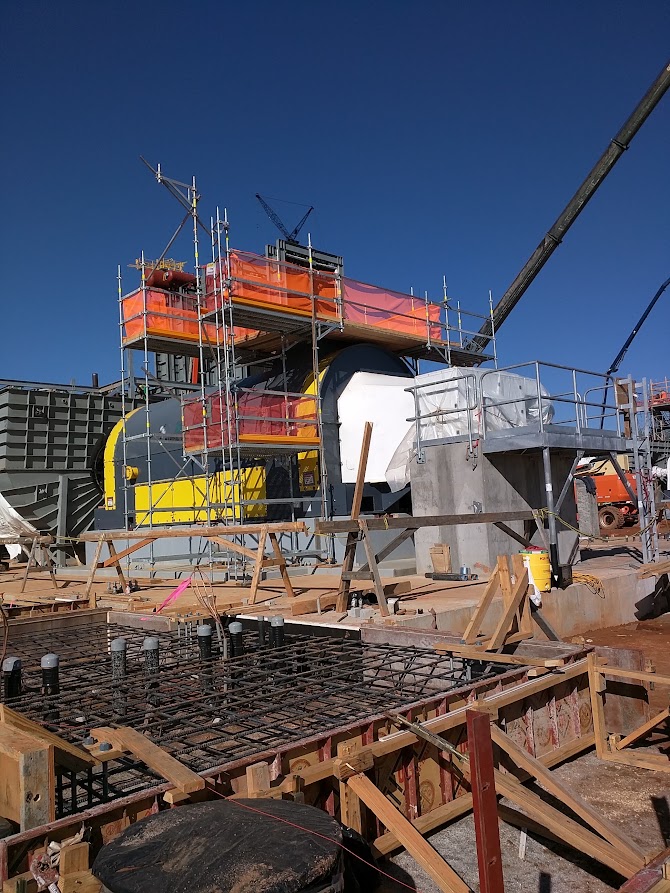
The Carolinas are quickly becoming a focal point for data center development in the Southeast. With strong fiber infrastructure, a growing technology sector, access to major transportation corridors, and business-friendly environments, both North Carolina and South Carolina are attracting significant investment in cloud computing and artificial intelligence (AI) facilities.
As AI continues to transform industries ranging from healthcare and manufacturing to finance and logistics, the demand for reliable computing power is increasing at an extraordinary pace. Behind every AI platform, machine learning model, and cloud-based application are data centers operating around the clock. These facilities require enormous amounts of electrical power, creating new challenges for developers, utility providers, and infrastructure engineers throughout the region.
At Structural Innovations, we recognize that reliable power infrastructure begins with sound structural engineering. Our experience designing concrete mass block foundations for turbine generators and engineered foundation systems for power transformers helps support the critical infrastructure needed to power the next generation of AI facilities across North and South Carolina.
The Carolinas Face Increasing Power Demand
The growth of large-scale data centers throughout the Carolinas has intensified demand on regional electrical infrastructure. Many utility providers are investing heavily in transmission upgrades, substations, and generation capacity to support future growth. However, the accelerated pace of AI-driven development has also increased interest in localized power generation solutions.
Many new facilities are evaluating on-site or campus-based generation systems that can supplement grid power, enhance resiliency, and support phased expansion plans. Small and mid-sized turbine generators are increasingly viewed as a practical solution for providing dependable power close to where it is consumed.
Localized generation offers several advantages:
- Improved operational reliability
- Reduced dependence on grid capacity constraints
- Enhanced resilience during utility disruptions
- Scalable solutions for expanding data center campuses
- Support for future energy demands created by AI applications
As these facilities become more dependent on continuous power availability, the importance of properly engineered equipment foundations becomes even more critical.
Concrete Mass Block Foundations for Turbine Generators
Turbine generators represent a significant investment in both infrastructure and operational reliability. Unlike conventional building equipment, turbines create dynamic forces that must be carefully considered during foundation design.
Concrete mass block foundations remain one of the preferred solutions for supporting turbine installations due to their ability to provide the mass and stiffness necessary to manage equipment vibration and maintain long-term alignment.
Successful turbine foundation design requires consideration of several factors:
Dynamic Equipment Loading
Turbines generate operational vibrations that interact with both the supporting foundation and underlying soils. Proper design helps avoid resonance conditions and supports equipment performance throughout its service life.
Site-Specific Geotechnical Conditions
The Carolinas contain a wide variety of subsurface conditions, ranging from coastal sands and variable groundwater conditions in eastern regions to residual soils and rock formations in the Piedmont and foothill areas. Foundation solutions should be tailored to site-specific geotechnical information to address settlement, bearing capacity, and long-term performance considerations.
Equipment Integration
Turbine foundations require close coordination with mechanical and electrical equipment layouts, anchor bolt assemblies, embedded components, and construction sequencing. Early engineering involvement can help reduce installation challenges and improve project efficiency.
Long-Term Durability
Mission-critical facilities demand infrastructure capable of performing reliably for decades. Mass concrete foundation systems must be designed to address crack control, reinforcement detailing, thermal effects, and environmental exposure conditions common throughout the Southeast.
Transformer Foundations Are Essential to Reliable Power Distribution
While turbine generators often receive significant attention, transformers are equally critical components of a data center’s electrical infrastructure.
Whether located within a utility substation, private switching yard, or on-site energy facility, transformers are responsible for distributing and managing the large amounts of power required by modern AI operations.
Transformer foundations face unique engineering challenges, including:
Significant Equipment Loads
Large transformers can impose substantial dead loads that must be safely transferred into supporting soils while minimizing differential settlement.
Electrical Infrastructure Reliability
Transformer performance depends on stable support conditions. Foundation movement can affect connected systems, making proper design essential for long-term reliability.
Environmental and Containment Requirements
Many transformer installations include oil containment systems and associated site infrastructure. Structural foundation design often requires close coordination with civil, environmental, and electrical disciplines.
Extreme Weather Considerations
Throughout North and South Carolina, infrastructure may be exposed to hurricanes, severe thunderstorms, flooding events, and high wind conditions. Foundation designs should account for applicable environmental loads and site-specific risks.
Understanding the Carolinas Matters
One of the greatest advantages of working with a regional structural engineering firm is understanding the unique challenges associated with construction throughout North and South Carolina.
Projects in Charleston or Myrtle Beach may encounter vastly different subsurface conditions than developments in Charlotte, Raleigh, Greenville, Spartanburg, or the Triad region. Coastal groundwater influences, expansive soils, varying rock depths, and site accessibility all contribute to foundation design considerations.
Experienced structural engineers understand how these regional factors can influence both turbine and transformer foundation systems and can help develop solutions tailored to local project conditions.
Building the Foundation for the Southeast’s Digital Economy
The Carolinas are well-positioned to become a major hub for AI innovation and digital infrastructure. As developers continue investing in data centers, advanced manufacturing facilities, and energy infrastructure, dependable power generation and distribution systems will remain essential to operational success.
Localized turbine generation and robust transformer installations are expected to play a growing role in supporting these facilities. However, even the most advanced equipment depends on the performance of the foundation systems beneath it.
At Structural Innovations, we bring practical experience in the design of concrete mass block foundations, transformer foundations, and other critical infrastructure support systems throughout North and South Carolina. By combining structural engineering expertise with an understanding of equipment requirements and regional site conditions, we help clients develop durable, reliable foundation solutions for mission-critical projects.
As AI continues to reshape the economy and drive unprecedented demand for computing power, the Carolinas will be at the forefront of this transformation. While turbines generate the power and transformers distribute it, properly engineered foundations provide the stability that makes long-term performance possible.
Structural Innovations is proud to support the infrastructure that powers the future of North Carolina, South Carolina, and the rapidly growing AI economy across the Southeast.