

Open floor plans, larger kitchens, and brighter living spaces are some of the most common remodeling goals for homeowners across the Winston-Salem, Greensboro, and High Point area. Achieving these designs often requires removing interior walls—but this seemingly simple change can carry serious structural implications. That is where a licensed structural engineer plays a critical role.
Load-Bearing vs. Non-Load-Bearing Walls
Not all walls are created equal. Some simply divide space, while others are integral to the structural stability of your home. Load-bearing walls support vertical loads from floors, roof framing, or upper stories and transfer those loads safely down to the foundation. Removing or modifying one without proper evaluation can result in sagging floors, cracked drywall, doors that no longer close properly, and in severe cases, structural failure.
In many older homes throughout the Triad—especially those built before modern open-concept trends—interior walls frequently carry roof or floor loads. Proper identification of these walls requires more than a visual inspection; it requires an understanding of load paths, framing orientation, and regional construction practices.
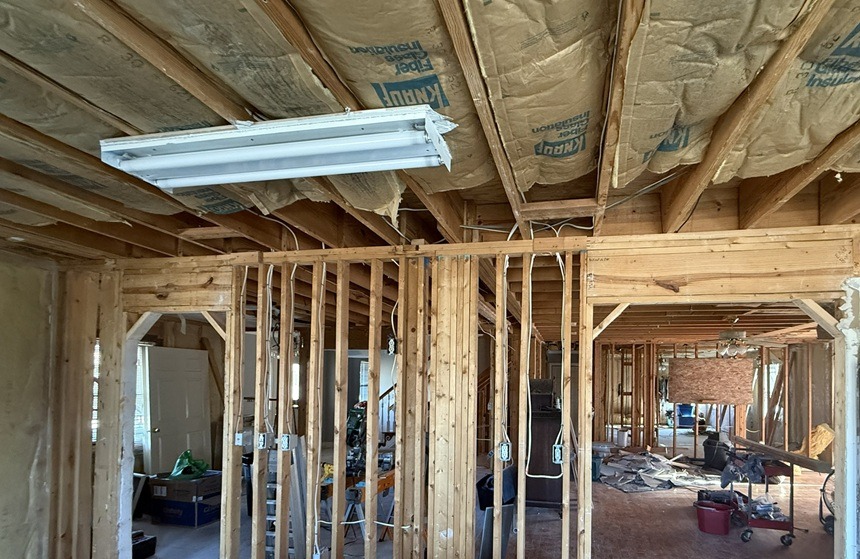
IRC Requirements and Non-Prescriptive Beam Design
The North Carolina Residential Code (based on the International Residential Code, or IRC) provides prescriptive span tables for conventional wood header beams. However, these tables are limited in scope. Once a design falls outside of the prescriptive provisions—which is common when using engineered materials such as Laminated Veneer Lumber (LVLs), steel beams, or longer spans—the IRC requires that the beam be engineered.
Specifically, IRC Section R301 and R502 require structural elements not complying with prescriptive tables to be designed in accordance with accepted engineering practices. This means:
- Load calculations for roof, floor, dead, live, and snow loads
- Proper sizing and verification of LVL, glulam, or steel beams
- Design of bearing conditions and supporting posts
- Verification of foundations and footings beneath new loads
- Consideration of deflection limits for serviceability
A structural engineer ensures the beam is not only strong enough, but also stiff enough to prevent long-term sagging or cracking—a concern that is especially important in renovations.
Why This Matters in Winston-Salem, Greensboro, and High Point
Local building departments throughout the Triad routinely require sealed engineering specifications for non-prescriptive header designs. Attempting to proceed without a structural engineer can lead to permit delays, failed inspections, or costly rework.
Additionally, factors such as roof geometry and construction era must be accounted for. Homes in Winston-Salem and Greensboro, for example, often include complex roof framing or multiple renovations layered over time—conditions that demand professional evaluation.
Protecting Your Investment and Safety
Hiring a structural engineer early in the remodeling process protects both safety and budget. A properly engineered beam design reduces construction uncertainty, ensures compliance with local codes, and provides peace of mind for homeowners and contractors alike.
If you are considering removing a wall or creating a large opening in your home in the North Carolina Triad, consulting a licensed structural engineer isn’t just a best practice—it’s an essential step toward a safe and successful renovation.